Affective computing represents one of the most fascinating and ethically complex frontiers in modern technology. By integrating principles from computer science, psychology, and cognitive science, this field aims to develop systems capable of recognizing, interpreting, and responding to human emotions. The implications are profound, touching industries from healthcare to marketing, yet they come with significant ethical questions that society is only beginning to grapple with.
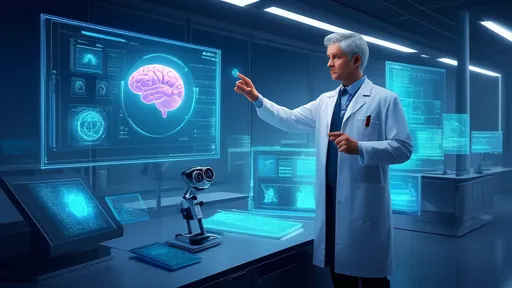
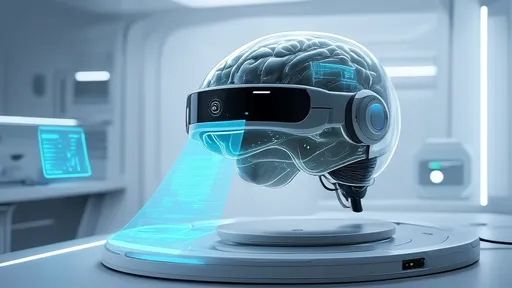
At its core, affective computing relies on a combination of hardware and software to detect emotional cues. Cameras and microphones capture facial expressions, vocal tones, and physiological signals such as heart rate or skin conductance. Advanced algorithms, often powered by machine learning, then analyze these inputs to infer emotional states. For instance, subtle changes in eyebrow position or voice pitch might indicate stress or excitement, while patterns in speech rhythm could reveal underlying mood disorders.
The potential applications are vast and transformative. In mental health, affective systems can provide real-time monitoring for patients with depression or anxiety, offering alerts to caregivers when concerning patterns emerge. In education, adaptive learning platforms could adjust content based on a student’s engagement level, potentially reducing frustration and improving outcomes. Customer service chatbots equipped with emotional intelligence might de-escalate tense interactions, while automotive systems could detect driver fatigue and prevent accidents.
However, the very power of these technologies invites serious ethical scrutiny. One major concern is privacy: continuous emotion tracking creates detailed intimate profiles without explicit consent. When devices monitor facial expressions or voice patterns in homes, offices, or public spaces, individuals may never know how their emotional data is being collected, stored, or used. This is especially troubling when such information is leveraged for commercial purposes, such as targeted advertising that manipulates vulnerable emotional states.
Another critical issue is bias and accuracy. Emotion recognition algorithms are often trained on datasets that lack diversity, leading to higher error rates for certain demographics. If a system misreads emotions based on gender, ethnicity, or cultural background, it could reinforce harmful stereotypes or deny services unfairly. Moreover, emotions are deeply contextual and personal—a smile might not always mean happiness, and tears don’t universally signal sadness. Reducing complex human experiences to binary outputs risks oversimplifying what it means to be human.
The deployment of affective computing in sensitive areas like hiring or law enforcement raises additional red flags. Imagine a job applicant being rejected because an AI detected "nervousness" during an interview, or a suspect flagged by a system that misinterpreted facial cues as deceit. Such scenarios highlight how emotion-sensing tools could become instruments of discrimination, amplifying existing inequalities under the guise of objectivity.
Transparency and consent are foundational to addressing these challenges. Users must have clear information about when and how their emotional data is being captured, along with meaningful control over its use. Regulatory frameworks, similar to GDPR for personal data, may be necessary to ensure that affective technologies operate within ethical boundaries. Companies and researchers should also prioritize algorithmic fairness, investing in diverse training data and rigorous testing to minimize biases.
Beyond technical fixes, there is a deeper philosophical question: should we automate emotional understanding at all? Human emotions are nuanced, culturally shaped, and often contradictory. While machines can approximate certain aspects, they may never fully grasp the richness of human experience. Over-reliance on affective systems could lead to emotional deskilling, where people become less adept at interpreting each other’s feelings without technological mediation.
Despite these concerns, the genie is out of the bottle. Affective computing is already here, embedded in everything from smartphones to smart homes. The task ahead is not to halt progress but to guide it with wisdom and foresight. Interdisciplinary collaboration— involving ethicists, psychologists, engineers, and policymakers—will be essential to develop standards that protect human dignity while fostering innovation.
In the end, the story of affective computing is still being written. Its ultimate impact will depend on the choices we make today about design, regulation, and deployment. By prioritizing human values over mere efficiency, we can harness this technology to enhance empathy and connection, rather than undermine them. The goal should be a future where machines serve not just our practical needs, but our emotional well-being too.

By /Aug 26, 2025

By /Aug 26, 2025

By /Aug 26, 2025

By /Aug 26, 2025

By /Aug 26, 2025

By /Aug 26, 2025

By /Aug 26, 2025

By /Aug 26, 2025

By /Aug 26, 2025

By /Aug 26, 2025

By /Aug 26, 2025
By /Aug 26, 2025
By /Aug 26, 2025
By /Aug 26, 2025

By /Aug 26, 2025

By /Aug 26, 2025
By /Aug 26, 2025

By /Aug 26, 2025
By /Aug 26, 2025
By /Aug 26, 2025
