In the ever-evolving landscape of technology, molecular computing emerges as a revolutionary paradigm, shifting the focus from silicon-based architectures to the intricate world of molecules. This approach leverages the fundamental properties of atoms and molecules to encode, process, and transmit information, offering a glimpse into a future where computation is deeply intertwined with chemistry and biology. Unlike traditional computing, which relies on binary digits and electronic signals, molecular computing harnesses the vast potential of molecular interactions, promising unprecedented efficiency, miniaturization, and novel applications.
The concept of using molecules for computation is not entirely new; it traces its roots back to visionary ideas proposed decades ago. However, recent advancements in nanotechnology, synthetic biology, and materials science have accelerated progress, turning theoretical possibilities into tangible experiments. At its core, molecular computing seeks to exploit the natural behaviors of molecules—such as their ability to bind, react, and change states—to perform logical operations and store data. This biomimetic strategy not only aligns with sustainable practices but also opens doors to computing in environments where conventional electronics falter, such as inside living organisms or in extreme conditions.
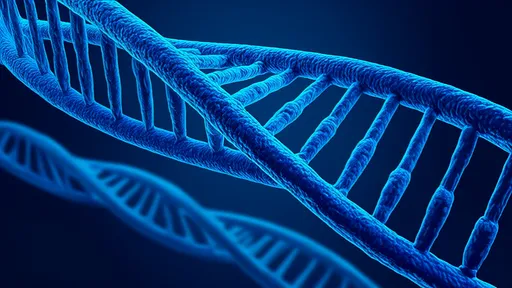
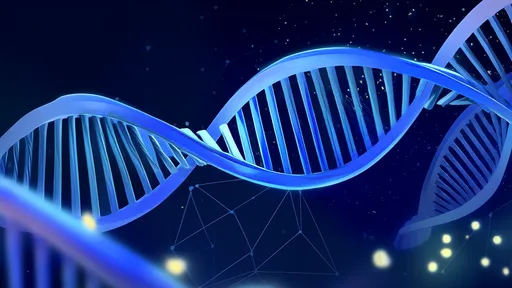
Information encoding in molecular computing is a fascinating departure from digital binaries. Here, data can be represented through various molecular attributes: the sequence of bases in DNA, the conformational changes in proteins, the oxidation states of molecules, or even the spatial arrangement of atoms. For instance, DNA computing utilizes the four nucleotide bases—adenine, thymine, cytosine, and guanine—as a quaternary code, vastly expanding the information density compared to binary systems. A single gram of DNA can theoretically store exabytes of data, dwarfing the capacity of existing storage media. Similarly, molecular switches and logic gates can be designed to change states based on chemical inputs, encoding binary or multi-valued information through molecular transformations.
The processing of information in molecular systems occurs through chemical reactions and molecular interactions, which are inherently parallel and energy-efficient. Enzymes, for example, can catalyze thousands of reactions simultaneously, enabling massive parallelism that surpasses even the most advanced supercomputers. Molecular logic gates, constructed from synthetic molecules or biomolecules, can perform Boolean operations like AND, OR, and NOT by responding to specific stimuli such as light, pH, or the presence of other molecules. These gates can be cascaded to form complex circuits, mimicking the functionality of electronic processors but at a nanoscale. Moreover, molecular systems often operate isothermally, reducing energy consumption and heat generation, which are significant limitations in traditional computing.
One of the most promising aspects of molecular computing is its integration with biological systems. DNA computing, pioneered by researchers like Leonard Adleman, has demonstrated the ability to solve computational problems, such as the Hamiltonian path problem, using biochemical techniques. In these setups, DNA strands represent possible solutions, and laboratory processes like polymerase chain reaction (PCR) and gel electrophoresis are used to "compute" the answer. Beyond DNA, other biomolecules like RNA, proteins, and even entire cells are being engineered for computational tasks. Synthetic biologists, for instance, have created genetic circuits that function as oscillators, counters, or sensors, enabling cells to process environmental information and execute programmed behaviors.
Another innovative approach involves molecular electronic devices, where individual molecules act as wires, transistors, or memory elements. Techniques such as scanning tunneling microscopy and molecular self-assembly allow for the construction of molecular-scale circuits. These devices exploit quantum mechanical effects, such as tunneling and coherence, to achieve switching and signal propagation. While still in early stages, this research hints at a future where Moore's Law could be extended beyond the limits of silicon, with components measuring just nanometers in size.
Despite its potential, molecular computing faces significant challenges. Reliability and error rates are concerns, as molecular interactions can be stochastic and prone to noise. Chemical degradation, unintended reactions, and environmental sensitivities may compromise accuracy. Scaling up molecular systems to handle complex computations while maintaining stability is another hurdle. Additionally, interfacing molecular computers with traditional electronic systems requires innovative transduction methods to convert between chemical and electronic signals. Researchers are addressing these issues through error-correction codes, robust molecular designs, and hybrid approaches that combine the best of both worlds.
The applications of molecular computing are vast and interdisciplinary. In medicine, molecular computers could revolutionize diagnostics and therapeutics. Imagine smart drug delivery systems that compute the need for medication based on real-time biomarkers, releasing drugs only when necessary. In environmental monitoring, molecular sensors could detect pollutants or pathogens with high specificity, processing data on-site without external power. In data storage, molecular archives could preserve vast amounts of information for millennia, as demonstrated by projects encoding digital data into synthetic DNA. Furthermore, molecular computing might enable new forms of artificial intelligence, with neural networks implemented using chemical reactions or biological neurons.
Looking ahead, the convergence of molecular computing with fields like quantum computing and artificial intelligence promises even greater breakthroughs. Quantum molecular computing, for instance, explores how molecular systems can harness quantum superposition and entanglement for computation. Meanwhile, AI algorithms are being used to design optimal molecular structures for specific computational tasks, creating a feedback loop between computation and its molecular implementation. As research progresses, we may witness the rise of autonomous molecular machines that compute, decide, and act independently at the nanoscale.
In conclusion, molecular computing represents a bold leap toward a more integrated and natural form of information processing. By encoding data in molecules and leveraging their dynamic properties, this field challenges the boundaries of what computation can achieve. While obstacles remain, the progress so far inspires optimism that molecular systems will complement, and perhaps one day surpass, electronic computing in certain domains. As scientists continue to unravel the complexities of molecular interactions, the dream of computing with the building blocks of life itself moves closer to reality, heralding a new era of technological innovation.

By /Aug 26, 2025

By /Aug 26, 2025
By /Aug 26, 2025

By /Aug 26, 2025

By /Aug 26, 2025
By /Aug 26, 2025

By /Aug 26, 2025

By /Aug 26, 2025

By /Aug 26, 2025

By /Aug 26, 2025

By /Aug 26, 2025
By /Aug 26, 2025
By /Aug 26, 2025
By /Aug 26, 2025

By /Aug 26, 2025
By /Aug 26, 2025
By /Aug 26, 2025
By /Aug 26, 2025
By /Aug 26, 2025
By /Aug 26, 2025
